Arrival
Where do I find myself now? I find myself here. Here I am. After all, wherever I go, there I am.
I find myself inside. The concept implies an outside.
I caught a stray thought just now: “Space is relative”. Now is relative, too.
Identity through differentiation. Surely it’s inadequate to define something by what it’s not. Actualization requires individuation.
I find myself lost in thought; mired in questions, their quantity incrementing toward the infinite. The abundant possibility, the ambiguity, the muddied truth.
To have any chance of orienting myself in this place, I need to impose structure. Boundaries.
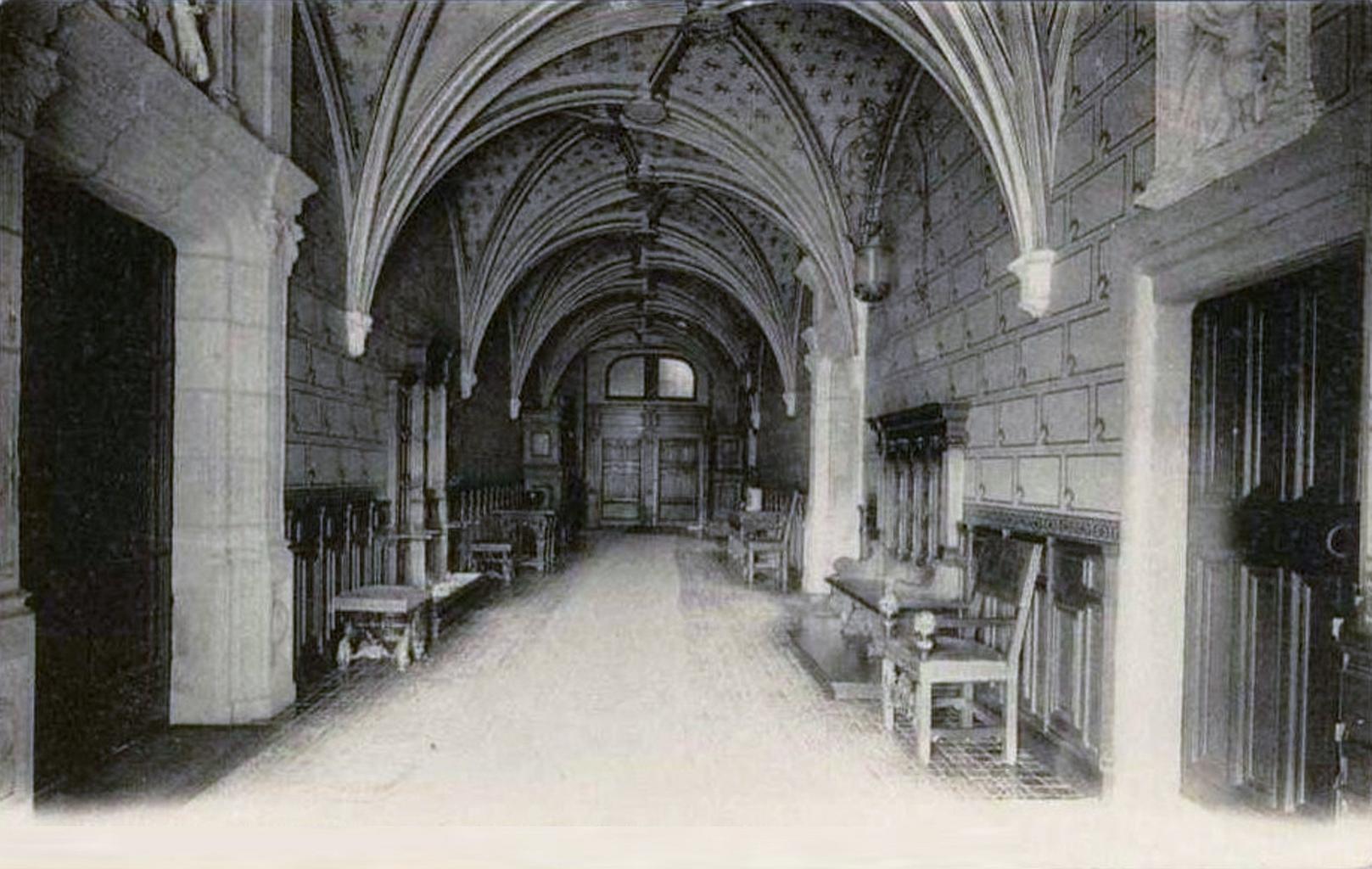
I dub this the first room: The Vestibule.
There is still work to be done. Urgently. Vague corridors sprawl beyond sight and imagination. There are doors and windows, thresholds innumerable. Apparently nothing of substance yet exists in the room. It is a room, right?
To know anything else, I must first know this: This is a room. The first room. The Vestibule. The name has implications. Yet the image remains unclear.
What is here in the room with me? Who is here with me? You’re here, aren’t you? I am beside myself.
Maybe you’ve heard of aphantasia. It’s an inability to voluntarily visualize mental images. It seems relevant here. “Here” is a place and a time. Oh, that’s right!
January 2, 2026.
It’s not just the first room. It’s the first day. That’s not entirely true. There’s the day before. And really, to arrive at any place, mustn’t one depart another place?
Maybe you’ve heard of liminality. It’s “the state of being in-between, a transitional, often ambiguous phase where you’ve left one status but haven’t yet entered the next”. This space feels “liminal”.
I caught another stray: Joseph Campbell. The monomyth. There’s something mythic about this place. Before I consider crossing any more thresholds, I should make this place better known.
Architecture
If this place won’t reveal its structure, I must take it upon myself to design it.
The Vestibule is a transitional space, separating an outside from an interior. It is inside. That means it is a room. A room with walls, a ceiling, and a floor. A box of sorts.
I am not cognizant of how I entered or arrived. Surely there’s a “door”. From this vantage it’s an exit. From the other side, an entrance.
Catching strays: The room is a metaphor. Perhaps all rooms are. I’ll hold the thought.
Let’s take inventory:
- I am here, when I am.
- You are here, when you are.
- I have a place to hang up my coat, and a coat which I have hung up.
- There are open seats. Now I occupy one.
- There is written text. My own words!
- There’s an exit.
- There are hallways, doors, windows, stairs, and thresholds of a still unknown quantity.
- It is daytime.
A couple of the items didn’t exist before I itemized them. Quite a bit of text was there before I realized it. I suspect there’s more which I don’t yet see. I suspect I’ll know it when I see it.
I’m coming to realize this behavior isn’t entirely novel. Rooms are empty before furnished. Doors lead nowhere if there’s nothing on the other side. A space is not a room until it is contained.
I admit, I was disoriented on arrival. But now that the simplest structure is in place, I can work toward something. I’ll create an agenda and segregate further enhancements to separate efforts.
Agenda:
- Name {this place} containing The Vestibule. Oh right, Heady Rooms.
- Draft a map of the known boundaries of Heady Rooms
- Determine the intended function of The Vestibule
- Store the thoughts of my arrival in a place so as not to disorient visitors.
- Draft a more sane welcome message
- Create an announcements board, or calendar, or to do list.
- Create and sign a Guestbook
Leave a Reply